
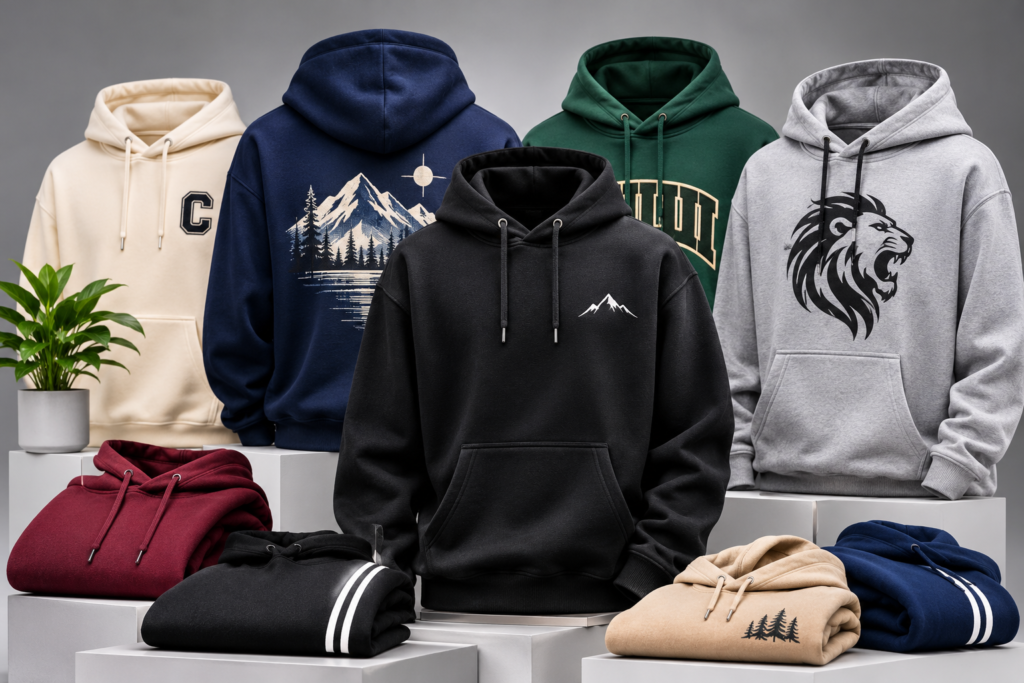
Custom hoodies have become much more than comfortable clothing. They are now an important part of modern fashion, streetwear culture, business branding, and promotional merchandise. From independent clothing labels and established fashion brands to sports teams, schools, and growing businesses, more organisations are choosing custom hoodies to express their identity and connect with their audiences.
A well-designed hoodie can communicate your brand personality without saying a single word. Whether it features a simple embroidered logo, an oversized graphic, bold typography, or a creative back design, the right details can transform an ordinary hoodie into something people genuinely want to wear.
However, creating a hoodie that stands out requires more than simply placing a logo on the chest. You need to consider colours, materials, artwork, printing techniques, embroidery, placement, and the overall appearance of the garment.
If you are planning to launch a clothing collection, upgrade your company merchandise, or create personalised apparel for a special event, choosing the right design is essential.
In this guide, we explore 15 creative custom hoodie design ideas that can help your brand stand out, attract attention, and create a memorable impression.
Why Are Custom Hoodies Important for Modern Brands?
Before exploring different hoodie designs, it is worth understanding why customised hoodies have become such a popular choice for businesses and fashion labels.
Unlike many promotional products that people use occasionally, hoodies are practical garments that can be worn throughout the year. Their comfortable fit, versatile appearance, and large design areas make them suitable for a wide range of branding opportunities.
Here are some reasons why custom hoodies are valuable for modern brands.
1. They increase brand visibility
A hoodie featuring your company logo, brand name, or unique artwork can introduce your business to new audiences whenever someone wears it.
2. They create a professional brand identity
Matching hoodies help businesses, sports clubs, and teams develop a consistent appearance. They can also make staff members feel more connected to their organisation.
3. They offer creative design possibilities
From minimalist embroidery to oversized printed graphics, hoodies provide plenty of opportunities to experiment with different creative styles.
4. They support clothing brand launches
For independent fashion labels, custom hoodies are excellent products for introducing a new collection or expanding an existing clothing range.
5. They provide long-term promotional value
A comfortable, attractive hoodie may be worn repeatedly, allowing your branding to remain visible over an extended period.
Now, let’s explore 15 hoodie design ideas that can help you create something distinctive.
1. Minimalist Logo Embroidered Hoodies
Sometimes, the simplest designs create the strongest impression.
Minimalist hoodies featuring a small embroidered logo are an excellent choice for businesses and fashion brands that prefer a clean, sophisticated appearance.
Instead of covering the entire garment with artwork, this design focuses on a carefully positioned logo. The embroidery adds texture and creates a premium finish that looks attractive without being overly complicated.
Popular placements include:
- Left chest embroidery.
- Small centre-chest logo.
- Sleeve embroidery.
- Subtle branding near the bottom hem.
- Small embroidered artwork on the hood.
Black, white, grey, beige, and navy are particularly suitable colours for minimalist designs because they create a timeless appearance.
Why this design works: Minimalist embroidered hoodies are versatile, easy to style, and suitable for brands targeting customers who appreciate understated fashion.
They are especially effective for premium clothing collections, corporate merchandise, and businesses looking for professional branded apparel.
2. Oversized Graphic Print Hoodies
Oversized graphic hoodies are a popular choice for streetwear-inspired clothing collections.
This design combines a relaxed silhouette with large, eye-catching artwork. The graphics can include illustrations, abstract patterns, artistic typography, symbols, or original brand concepts.
The front, back, and sleeves can all be used to create a visually interesting design.
For example, you could feature a small brand logo on the front and a large illustrated graphic across the back. This creates a balanced appearance while giving the hoodie a distinctive identity.
Some popular graphic styles include:
- Abstract artwork.
- Vintage-inspired illustrations.
- Urban photography.
- Artistic line drawings.
- Bold geometric patterns.
- Creative brand graphics.
When developing oversized graphics, make sure the artwork complements the garment’s proportions.
Why this design works: Large graphics attract attention and give independent fashion brands an opportunity to express their creativity.
For streetwear labels, this style can become a recognisable feature of an entire collection.
3. Vintage and Retro-Inspired Hoodies
Vintage fashion continues to influence modern clothing design.
Retro-inspired custom hoodies use classic colours, nostalgic typography, distressed artwork, and old-school graphics to create a distinctive appearance.
You can take inspiration from different decades without directly copying existing designs.
For example, a vintage-inspired hoodie might include:
- Faded lettering.
- Retro sports graphics.
- Distressed brand logos.
- Classic college-style typography.
- Washed fabric colours.
- Vintage-inspired illustrations.
Popular colour combinations include faded black, cream, burgundy, forest green, and washed navy.
You can also experiment with slightly faded prints to create an authentic vintage appearance.
Why this design works: Retro hoodies appeal to customers who enjoy nostalgic fashion and distinctive clothing.
They are particularly suitable for streetwear brands, lifestyle collections, and limited-edition clothing releases.
4. Bold Typography Hoodies
Typography can turn a simple hoodie into a powerful branding statement.
Instead of relying entirely on illustrations or complicated graphics, this design uses carefully selected fonts, words, slogans, and lettering arrangements.
Your brand name could appear in large lettering across the chest, while a smaller slogan is placed underneath.
You can also experiment with vertical text, curved lettering, oversized fonts, and different typographic styles.
Some interesting typography approaches include:
- Large bold lettering.
- Minimalist lowercase text.
- Vintage college fonts.
- Gothic-inspired typography.
- Handwritten lettering.
- Distressed text effects.
Choosing the right font is extremely important because typography communicates the personality of your brand.
For example, bold lettering may suit a streetwear collection, while clean and simple typography may work better for a premium fashion label.
Why this design works: Typography-based hoodies are relatively straightforward to customise and can communicate your brand message immediately.
5. Two-Tone Custom Hoodies
Two-tone hoodies provide an opportunity to create something different through colour combinations.
Rather than using one colour throughout the garment, this style combines two complementary or contrasting shades.
For example, you could choose:
- Black and grey.
- Navy and cream.
- Burgundy and white.
- Forest green and beige.
- Brown and black.
- Charcoal and light grey.
The colours can be divided between the sleeves and body, hood and main garment, or upper and lower sections.
You can also introduce contrasting drawstrings, cuffs, and waistband details.
For branding, consider using a small embroidered logo that complements both colours.
Why this design works: Two-tone designs create visual interest without requiring complicated artwork.
They are particularly useful for brands that want to introduce something different while maintaining a clean and wearable appearance.
6. Sleeve-Printed Custom Hoodies
Sleeves are often overlooked when designing custom hoodies, but they offer valuable additional space for branding.
A sleeve-print design can make an ordinary hoodie feel more distinctive without overcrowding the front or back.
You could include your brand name, a short slogan, geometric artwork, or repeated graphic elements along one or both sleeves.
For a more subtle appearance, use a small embroidered symbol near the wrist.
Some creative sleeve ideas include:
- Vertical brand lettering.
- Repeated logos.
- Small graphic illustrations.
- Decorative stripes.
- Coordinates or meaningful dates.
- Minimalist text near the cuff.
You can also combine sleeve branding with a small front logo for a coordinated appearance.
Why this design works: Sleeve designs add another branding opportunity and help create a more complete hoodie design.
They are especially useful for fashion labels looking to develop recognisable clothing collections.
7. Custom Hoodies with Large Back Prints
The back of a hoodie provides a large surface for creative artwork.
A large back print can become the main feature of your design, particularly when paired with simple front branding.
For example, you could place a small embroidered brand logo on the left chest and use a large graphic illustration across the back.
This combination creates an interesting contrast between subtle front branding and expressive artwork.
Back-print designs can feature:
- Brand illustrations.
- Large typography.
- Artistic graphics.
- Inspirational messages.
- Abstract patterns.
- Collection-specific artwork.
When designing large graphics, consider the size and positioning carefully to ensure the artwork looks balanced when the hoodie is worn.
Why this design works: Large back prints create an opportunity to communicate a brand’s identity in a more expressive way.
This style is particularly popular for streetwear collections, merchandise, and independent fashion brands.
8. Premium Puff Print Hoodies
If you want your hoodie design to have a raised appearance, puff printing is an interesting option.
Puff printing uses a specialised printing process that creates a slightly raised, textured effect on the garment.
The finished design stands out from the fabric and adds another dimension to the artwork.
This technique works particularly well with bold lettering, simple logos, and graphic elements.
Popular puff-print applications include:
- Large brand names.
- Short slogans.
- Minimalist front logos.
- Oversized back lettering.
- Decorative symbols.
Puff printing is often used on streetwear-inspired hoodies because it creates a distinctive visual and tactile finish.
However, artwork needs to be prepared appropriately for the printing process. Very small details may not reproduce as effectively as larger, simpler shapes.
Why this design works: Puff printing adds texture and helps create a premium-looking garment without relying on traditional flat graphics.
9. College and Varsity-Inspired Hoodies
College-style designs remain a popular choice for casual fashion and sports-inspired clothing.
These hoodies typically feature bold lettering, athletic graphics, numbers, and traditional university-inspired layouts.
You can create your own original varsity-inspired design using your brand name, establishment year, or a meaningful slogan.
For example, the front could feature large arched lettering, while the back includes a number or smaller supporting text.
Popular design elements include:
- Arched brand names.
- Large athletic numbers.
- Classic block lettering.
- Established-year details.
- Sports-inspired symbols.
- Contrasting colour combinations.
Embroidery, appliqué, and printed graphics can all be considered depending on the appearance you want to achieve.
Why this design works: Varsity-inspired hoodies combine a familiar fashion style with opportunities for personalisation.
They are suitable for sports teams, universities, clothing brands, and casual merchandise collections.
10. Monochrome Custom Hoodies
Monochrome designs use different shades of a single colour family to create a coordinated appearance.
Black-on-black, white-on-grey, and navy-on-navy combinations are excellent examples.
The design may use contrasting textures rather than contrasting colours to create visual interest.
For example, a black hoodie could feature black embroidery, creating a subtle raised logo that becomes visible through its texture.
Other options include:
- Tonal embroidery.
- Matching printed graphics.
- Contrasting fabric panels.
- Different shades of grey.
- Subtle textured lettering.
Monochrome hoodies are especially suitable for brands that prefer a premium and understated aesthetic.
Why this design works: A monochrome colour palette is versatile, timeless, and easy to incorporate into different clothing collections.
It also allows the quality of the garment, stitching, and design details to become the main focus.
11. Nature-Inspired Graphic Hoodies
Nature-inspired artwork is an excellent way to introduce creativity into your hoodie collection.
This style uses elements from the natural world, including mountains, forests, flowers, landscapes, wildlife, and botanical illustrations.
You can create a minimalist design using a small mountain symbol or develop a larger illustrated landscape for the back of the hoodie.
Some interesting concepts include:
- Mountain range illustrations.
- Botanical line drawings.
- Forest-inspired graphics.
- Ocean and wave artwork.
- Wildlife illustrations.
- Nature-inspired typography.
Earthy colours such as olive green, brown, cream, and charcoal work particularly well with these designs.
Why this design works: Nature-inspired graphics offer a distinctive visual direction for lifestyle brands, outdoor clothing labels, and independent fashion collections.
12. Custom Hoodies with Personalised Names and Numbers
Personalisation can make a hoodie feel more meaningful to the person wearing it.
Adding individual names, initials, numbers, or special dates is an excellent option for groups, teams, organisations, and promotional events.
For example, a sports team could have matching hoodies featuring its main logo on the front and individual player names on the back.
A business could personalise employee hoodies with names or department details.
Possible personalisation options include:
- Individual names.
- Initials.
- Team numbers.
- Event dates.
- Department names.
- Short personal messages.
Embroidery and printing can both be suitable depending on the design and garment requirements.
Why this design works: Personalised hoodies create a stronger connection between the garment and its owner.
They are ideal for teamwear, corporate clothing, school merchandise, and special occasions.
13. Appliqué and Patch-Style Hoodie Designs
If you want to give your hoodie a more textured and distinctive appearance, consider appliqué or patch-style branding.
Appliqué involves attaching shaped fabric pieces to the garment to create a design. Depending on the artwork, additional stitching can be used around the edges to secure and define the shape.
Patch-style designs can also introduce interesting materials, textures, and colours.
You could use:
- Fabric logo appliqué.
- Embroidered patches.
- Woven logo patches.
- Chenille-style lettering.
- Decorative fabric shapes.
- Combination embroidery and appliqué.
For example, a clothing brand could feature a large fabric logo on the front with smaller embroidered details on the sleeve.
The final result can create a more dimensional appearance than a standard printed design.
Why this design works: Appliqué and patch-style details help brands create distinctive garments with a strong visual identity.
They are especially suitable for premium streetwear, varsity collections, and statement clothing.
14. Minimalist Sleeve and Hood Branding
Branding does not always need to be placed in the centre of a hoodie.
Small details around the hood, sleeves, and cuffs can create an attractive design while keeping the main garment relatively simple.
For example, you could add a small embroidered symbol to the hood and your brand name along one sleeve.
Other options include:
- Small embroidery on the hood.
- Logo details near the cuff.
- Short text along the sleeve.
- Decorative stitching.
- Small branding near the pocket.
- Tonal artwork on the shoulder.
The important thing is to maintain a consistent visual style.
Too many unrelated design elements can make a hoodie look cluttered, so it is best to select a few carefully positioned details.
Why this design works: Small branding details create a more considered design and give customers something interesting to notice.
This style is particularly suitable for premium casualwear and minimalist fashion labels.
15. Limited-Edition Collection Hoodies
Limited-edition hoodies are a great opportunity to introduce exclusive designs that make your brand memorable.
Instead of producing the same design throughout the year, you can create special collections based on particular themes, seasons, events, or brand milestones.
For example, a winter collection could feature heavyweight hoodies with embroidered artwork and seasonal colours.
A special anniversary collection could include the brand’s founding year, a unique graphic, and limited-edition sleeve details.
Some collection ideas include:
- Winter streetwear collection.
- Anniversary edition hoodies.
- Seasonal colour collections.
- Artist collaboration designs.
- Special event merchandise.
- Exclusive graphic releases.
You can also use different garment colours, printing techniques, and embroidery placements to distinguish each release.
Why this design works: Limited-edition designs can make a collection feel more exclusive and give customers a reason to explore new products.
For independent clothing brands, they also provide an opportunity to test different creative directions.
How to Choose the Right Custom Hoodie Design for Your Brand
Having plenty of creative ideas is a good starting point, but selecting the right design requires careful consideration.
The best hoodie design should reflect your brand identity while remaining comfortable, attractive, and practical.
Here are several factors to consider before finalising your design.
1. Understand Your Target Audience
Start by thinking about the people who will wear your hoodies.
Are you targeting streetwear enthusiasts, sports teams, business customers, students, or everyday casualwear customers?
Different audiences may prefer different styles.
For example, a streetwear audience may appreciate oversized graphics and bold typography, while corporate customers may prefer simple embroidered logos.
Understanding your audience will help you make better decisions about the overall design.
2. Choose the Right Hoodie Fabric
Fabric quality plays an important role in the appearance, comfort, and durability of a custom hoodie.
Some commonly used materials include:
Cotton: Cotton is popular because of its soft feel and comfortable everyday wear.
Polyester: Polyester is often used for its durability and moisture-management properties.
Cotton-polyester blends: These combine characteristics of both materials and are commonly used in casual clothing.
Fleece-backed fabrics: These offer a soft interior and are suitable for warmer, comfortable hoodies.
When choosing a fabric, consider the intended use, desired weight, finish, and overall budget.
3. Select the Right Hoodie Fit
The fit can influence the entire appearance of your hoodie.
Common options include:
- Regular fit.
- Relaxed fit.
- Oversized fit.
- Slim fit.
- Cropped fit.
Oversized hoodies are often associated with contemporary streetwear, while regular-fit styles are suitable for everyday use and business merchandise.
Choose a fit that matches your brand’s positioning.
4. Decide Between Printing and Embroidery
Printing and embroidery are two popular ways to customise hoodies.
Both offer different visual results, so the right choice depends on your design.
Custom hoodie printing
Printing is suitable for detailed artwork, colourful illustrations, photographs, and large graphic designs.
Common methods include screen printing, direct-to-garment printing, and transfer-based printing.
Custom hoodie embroidery
Embroidery uses stitching to create logos, lettering, and decorative designs directly on the garment or an appropriate fabric component.
It provides a textured finish and is particularly suitable for smaller logos and premium branding.
You can also combine both techniques where appropriate, such as using an embroidered front logo with a printed back graphic.
5. Choose Colours That Represent Your Brand
Your hoodie colours should complement your existing brand identity.
If your business already uses particular brand colours, consider incorporating them into the design.
However, you do not need to restrict yourself to one colour combination.
You can develop different colourways for different collections while keeping the logo and overall branding consistent.
Popular hoodie colours include:
- Black.
- White.
- Grey.
- Navy.
- Beige.
- Brown.
- Burgundy.
- Forest green.
Think about how your chosen logo colours will look against the hoodie fabric before finalising your selection.
6. Pay Attention to Logo Placement
Logo placement can significantly influence the final appearance of your hoodie.
A small left-chest logo creates a subtle and professional look, while a large centre-chest design attracts more attention.
The back, sleeves, hood, and pocket area can also be used for additional branding.
Before production, review the logo dimensions and placement to make sure everything looks balanced.
7. Prepare High-Quality Artwork
Your artwork should be suitable for the chosen printing or embroidery process.
Vector formats such as AI, EPS, and SVG are useful for scalable artwork, while high-resolution PNG files may be suitable for certain printing applications.
For embroidery, artwork may need to be converted into an embroidery-ready digital file through a process called digitising.
Providing clear artwork helps ensure the production team can understand your intended design.
Custom Hoodie Printing vs Embroidery: Which Is Better?
One of the most important decisions when creating custom hoodies is choosing between printing and embroidery.
There is no single best option for every project. Your choice should depend on the design, budget, fabric, and intended appearance.
| Feature | Custom Printing | Custom Embroidery |
|---|---|---|
| Appearance | Flat or textured, depending on method | Raised stitched finish |
| Detailed artwork | Suitable for many complex graphics | Better for simplified artwork |
| Colour options | Often supports multiple colours | Depends on thread selection |
| Best for | Large graphics and illustrations | Logos and lettering |
| Design placement | Front, back, and sleeves | Suitable garment areas |
| Overall style | Creative and expressive | Classic and premium |
When Should You Choose Printing?
Choose printing if your artwork includes multiple colours, detailed illustrations, gradients, or large graphics.
It is particularly useful for oversized back designs and creative streetwear collections.
When Should You Choose Embroidery?
Choose embroidery if you want a textured logo, a professional appearance, or a more traditional branded garment.
It is especially suitable for company hoodies, teamwear, and premium clothing collections.
Can You Combine Printing and Embroidery?
Yes. Combining both techniques can create an interesting design.
For example, you could use a small embroidered logo on the front and a large printed graphic on the back.
This approach allows you to balance subtle branding with more expressive artwork.
How Businesses Can Use Custom Hoodies for Branding
Custom hoodies are not limited to fashion labels. They can also support branding activities across different industries.
Corporate Clothing
Businesses can create branded hoodies for employees, helping teams maintain a consistent appearance at work, events, and promotional activities.
Promotional Merchandise
Custom hoodies can be included in marketing campaigns, giveaways, customer rewards, and promotional packages.
Sports Teams and Clubs
Matching hoodies can help teams develop a coordinated appearance during training sessions, competitions, and travel.
Schools and Universities
Educational organisations can use personalised hoodies for student merchandise, societies, sports clubs, and special events.
Independent Fashion Brands
For clothing startups, custom hoodies provide an opportunity to introduce original artwork, establish brand recognition, and develop a wider clothing collection.
Common Mistakes to Avoid When Designing Custom Hoodies
Even an excellent creative concept can lose its impact if the design is not prepared properly.
Avoid these common mistakes when planning your custom hoodie collection.
1. Using Too Many Design Elements
Adding multiple logos, colours, graphics, and slogans can make a hoodie look overcrowded.
Choose a clear visual direction and focus on a few important elements.
2. Ignoring Fabric Quality
A hoodie may look attractive in a mockup but feel uncomfortable if the fabric is unsuitable.
Always consider material, weight, fit, and construction.
3. Choosing the Wrong Logo Size
A logo that is too large or too small can affect the overall balance of the garment.
Review measurements and placement before approving production.
4. Using Low-Resolution Artwork
Low-quality artwork can create problems during printing and production.
Prepare clean, high-quality files and confirm the required format with your manufacturer.
5. Following Trends Without Developing Your Own Identity
Fashion trends can provide inspiration, but copying every popular style will not help your brand become recognisable.
Use trends as a starting point and introduce original design elements.
6. Forgetting About the Back and Sleeves
The front is not the only area worth considering.
Using the back and sleeves creatively can help your hoodie design feel more complete.
Why Quality Matters When Ordering Custom Hoodies
A successful custom hoodie is about more than its appearance.
The fabric, stitching, printing, embroidery, fit, and finishing all contribute to the overall quality of the product.
For businesses and clothing brands, quality is particularly important because customers associate the garment with the brand behind it.
Before confirming an order, consider the following:
- Fabric composition and weight.
- Stitching and seam quality.
- Print or embroidery finish.
- Logo positioning.
- Size specifications.
- Colour consistency.
- Garment construction.
- Packaging and finishing requirements.
It is also useful to review a digital mockup or physical sample where available.
Taking time to check these details can help reduce production mistakes and ensure the finished garments match your expectations.
Frequently Asked Questions About Custom Hoodie Designs
1. What Are the Most Popular Custom Hoodie Design Ideas?
Some popular options include minimalist embroidered logos, oversized graphic prints, vintage-inspired designs, bold typography, two-tone hoodies, and large back prints.
The best option depends on your target audience and brand identity.
2. Are Custom Embroidered Hoodies Better Than Printed Hoodies?
Neither option is universally better.
Embroidery is ideal for logos and designs that benefit from a textured finish, while printing is suitable for detailed artwork and larger graphics.
Your design requirements should determine which technique you choose.
3. Can I Add My Company Logo to a Custom Hoodie?
Yes. Company logos can be added through printing, embroidery, appliqué, or suitable patch applications.
Popular placements include the left chest, centre chest, back, and sleeves.
4. What Is the Best Hoodie Colour for Branding?
Black, white, grey, navy, beige, and other neutral colours are versatile choices.
However, the best colour depends on your existing brand palette and the appearance you want to achieve.
5. Are Custom Hoodies Suitable for Small Clothing Brands?
Absolutely. Custom hoodies can help small clothing brands introduce original products, establish a recognisable identity, and develop their first collections.
Starting with a focused selection of designs and colourways can make collection planning easier.
6. Can I Combine Printing and Embroidery on One Hoodie?
Yes. You can combine different customisation techniques when the garment and production method allow it.
For example, an embroidered chest logo can be paired with a large printed back graphic.
7. What Artwork File Is Best for Custom Hoodie Production?
Vector formats such as AI, EPS, and SVG are useful for scalable logos and graphics.
High-resolution PNG files can also be suitable for certain printing applications.
Embroidery designs generally require an additional digitising process.
8. How Can I Make My Hoodie Brand Look More Premium?
Focus on good-quality fabric, a well-balanced fit, consistent branding, carefully selected colours, and professional finishing.
Small details such as tonal embroidery, quality drawstrings, and thoughtful logo placement can also improve the overall appearance.
9. Can Custom Hoodies Be Used for Promotional Events?
Yes. Custom hoodies are suitable for company events, exhibitions, sports activities, product launches, promotional campaigns, and team merchandise.
10. How Do I Start Creating My Own Custom Hoodie Collection?
Begin by identifying your target audience and selecting a design direction.
Next, decide on the hoodie style, fabric, colours, artwork, logo placement, and customisation method.
Prepare your artwork and review a mockup before moving forward with production.
Final Thoughts: Create Custom Hoodies That Represent Your Brand
A great hoodie design should do more than look attractive. It should communicate your brand identity, connect with your audience, and offer something people genuinely enjoy wearing.
From minimalist embroidered logos and oversized graphic prints to vintage artwork, varsity-inspired designs, and exclusive limited-edition collections, there are countless ways to create distinctive custom hoodies.
The most successful designs combine creativity with practicality. Choosing the right fabric, fit, colours, printing method, and embroidery details can make a significant difference to the final result.
Whether you are developing your first clothing collection, creating professional company merchandise, or expanding an established fashion label, investing time in thoughtful hoodie design can help your brand build a stronger identity.
Ready to bring your clothing ideas to life?
Explore the possibilities of custom apparel with Custom Caps Maker UK. From creative branding concepts to personalised clothing designs, focus on developing products that reflect your brand’s personality and make a lasting impression.
Your next great clothing collection could start with one outstanding hoodie design.

Alex Watson
Alex Watson is a custom headwear and branding expert who writes for Custom Caps Maker UK. He specializes in custom cap design, embroidery, and branding solutions, helping businesses and organizations create high-quality personalized headwear that stands out. Through his articles, Alex shares practical tips, industry insights, and expert advice on custom cap manufacturing and customization.