
In today’s competitive fashion industry, building a recognisable clothing brand requires more than simply offering attractive T-shirts, hoodies or jackets. Customers are increasingly interested in fashion accessories that reflect their personalities, lifestyles and individual preferences. Among these accessories, personalised caps have become an excellent addition to clothing collections, particularly for streetwear labels, independent fashion businesses and established apparel brands.
Personalised caps for clothing brands offer an effective way to introduce distinctive designs, strengthen brand recognition and expand product collections. Whether you are launching a new streetwear label, developing a premium fashion collection or looking for additional merchandise, custom caps can help give your business a recognisable identity.
From embroidered logos and personalised colours to different cap shapes, fabrics and finishing details, there are many ways to create headwear that reflects your brand’s personality.
However, choosing the right cap involves more than selecting a colour and placing a logo on the front. You need to consider the target audience, materials, construction, embroidery techniques, comfort, design placement and overall product quality.
In this guide, we will explore everything clothing brands should know about personalised caps, including popular styles, customisation options, manufacturing considerations and tips for creating headwear that customers will genuinely want to wear.
1. Why Are Personalised Caps Important for Clothing Brands?
A successful clothing brand needs a consistent visual identity. Every product should communicate something about the business, whether that is its design philosophy, lifestyle, quality standards or target audience.
Personalised caps provide another opportunity to communicate that identity.
Unlike ordinary accessories, custom-made headwear can incorporate your brand’s logo, signature colours, artwork, typography and other distinctive design elements. This allows you to create products that feel connected to your existing clothing collection.
There are several reasons why fashion businesses are adding custom caps to their product ranges.
Strengthen Brand Recognition
Brand recognition develops when customers repeatedly see and associate particular design elements with a business.
A personalised cap featuring your logo or signature artwork can help make your brand more recognisable. When customers wear your headwear outside their homes, they also introduce your brand to new audiences.
A well-designed cap can become a recognisable part of your overall brand identity.
Expand Your Product Collection
If your business currently sells T-shirts, sweatshirts, jackets or hoodies, adding personalised caps can help create a more complete fashion collection.
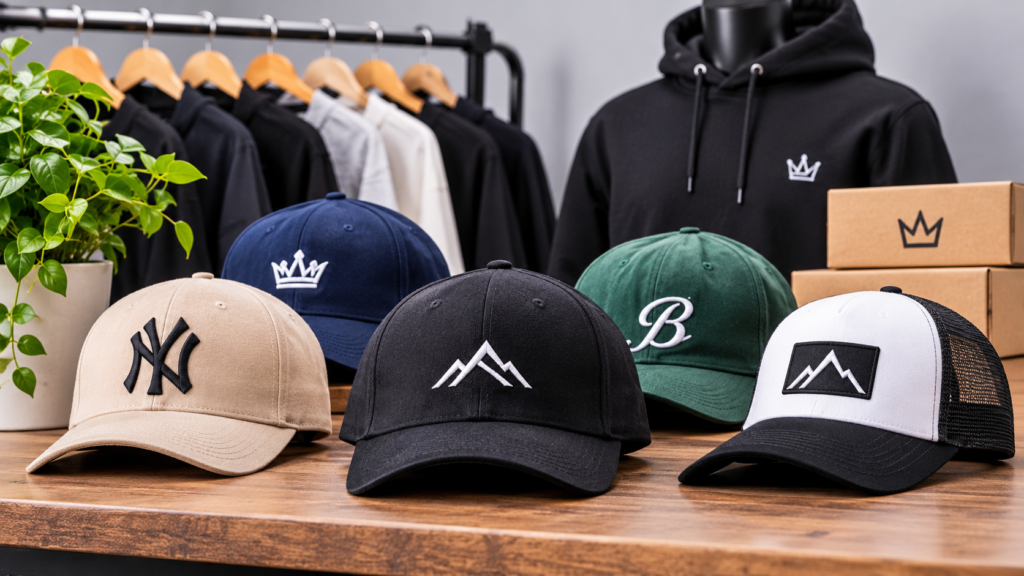
For example, a streetwear brand could introduce matching hoodies and embroidered baseball caps. A minimalist fashion label might prefer simple dad caps with subtle logo embroidery.
Offering complementary accessories also gives existing customers more ways to engage with your brand.
Create Additional Merchandise Opportunities
Custom caps are suitable for different types of fashion businesses, including independent designers, online clothing stores, streetwear labels and lifestyle brands.
They can be introduced as standalone products, limited-edition merchandise or accessories that complement seasonal clothing releases.
This flexibility makes personalised headwear a useful option for businesses looking to develop their product ranges.
2. Popular Types of Personalised Caps for Clothing Brands
Choosing the right cap style is one of the most important parts of developing a custom headwear collection.
Different styles communicate different fashion identities. Some have a relaxed everyday appearance, while others offer a structured, sporty or streetwear-inspired look.
Here are some popular options to consider.
Baseball Caps
Baseball caps are among the most versatile choices for clothing brands.
They usually feature a curved peak, a structured or semi-structured front and an adjustable back fastening. Their familiar shape makes them suitable for everyday fashion, casual collections and branded merchandise.
For a clothing brand, baseball caps can feature embroidered logos, initials, small graphics or larger front designs.
They work particularly well with casualwear, sports-inspired clothing and everyday streetwear collections.
Snapback Caps
Snapback caps are recognised by their flat peaks and adjustable plastic fastening at the back.
They have a strong connection with urban fashion and streetwear culture, making them a popular option for brands targeting younger fashion audiences.
You can customise snapbacks with front embroidery, side logos, back lettering and contrasting peak colours.
For brands that prefer bold designs, snapbacks provide a suitable base for more noticeable graphics and branding.
Trucker Caps
Trucker caps combine a fabric front panel with breathable mesh panels at the back.
Their distinctive construction gives them a casual, sporty appearance. They are particularly suitable for lifestyle brands, outdoor-inspired collections and relaxed streetwear designs.
Custom trucker caps can feature embroidered front logos, printed graphics, patches and personalised colour combinations.
The mesh construction also makes them an interesting option for brands that want to offer something different from traditional baseball caps.
Dad Caps
Dad caps typically have an unstructured or lightly structured crown, a curved peak and a relaxed overall shape.
They are particularly popular with minimalist clothing labels and lifestyle brands.
A small embroidered logo, subtle lettering or simple front design can create an understated appearance without making the cap look overly promotional.
If your brand focuses on clean designs, neutral colours and everyday clothing, dad caps are worth considering.
Fitted Caps
Fitted caps offer a structured appearance and are designed around specific head measurements rather than a standard adjustable closure.
They are often associated with sportswear, premium streetwear and fashion collections.
When selecting fitted caps, accurate sizing is particularly important because customers cannot adjust the back fastening to achieve a more comfortable fit.
Five-Panel and Six-Panel Caps
The number of fabric panels used in a cap affects its overall construction and appearance.
Five-panel caps are often associated with contemporary streetwear, skate-inspired fashion and casual outdoor styles.
Six-panel caps have a more traditional crown construction and are widely used for baseball caps and everyday headwear.
Both styles offer opportunities for personalised embroidery, printed graphics and distinctive colour combinations.
3. Choosing the Right Material for Custom Branded Caps
The material you select plays an important role in the appearance, comfort and performance of your personalised caps.
A design may look excellent, but the wrong fabric can affect how the finished product feels and performs.
Clothing brands should consider their intended audience, product positioning, season and overall collection aesthetic before selecting materials.
Cotton
Cotton is a popular option for everyday fashion accessories.
It offers a familiar, comfortable feel and works well with different cap constructions. Cotton caps can suit minimalist fashion labels, casual clothing collections and traditional baseball cap designs.
Washed cotton is another interesting option for brands looking for a vintage or slightly worn appearance.
Polyester
Polyester is widely used in sportswear and performance-inspired headwear.
It can be suitable for lightweight designs and different promotional or everyday applications. Depending on the fabric construction, polyester caps may also offer useful moisture-management properties.
It is worth discussing the specific fabric characteristics with your manufacturer before making a final selection.
Cotton and Polyester Blends
Blended fabrics combine different material characteristics to create a suitable balance for particular products.
The exact feel, appearance and performance will depend on the proportions and construction of the fabric.
For clothing brands, blended materials can offer additional flexibility when developing headwear for different audiences and purposes.
Mesh Fabrics
Mesh is commonly used in the rear panels of trucker caps.
It provides ventilation and gives the cap its distinctive appearance. Brands can combine different front-panel colours with contrasting mesh to create a recognisable design.
Corduroy
Corduroy offers a textured surface that can create a distinctive premium or vintage-inspired appearance.
It works particularly well for autumn and winter collections, retro fashion designs and brands that want to introduce different textures into their accessories range.
The most suitable fabric will depend on your design requirements and the intended use of the finished caps.
4. Customisation Options That Make Your Caps Unique
Customisation is what separates personalised caps from ordinary ready-made headwear.
Clothing brands can use different techniques to make their products more distinctive. The best option depends on the complexity of the artwork, the desired appearance and the overall budget.
Flat Embroidery
Flat embroidery is one of the most popular methods for custom branded caps.
It uses stitched threads to reproduce your logo, lettering or artwork directly onto the fabric.
This technique works well for:
- Brand names and wordmarks.
- Small logos and symbols.
- Initials and lettering.
- Detailed but suitably simplified artwork.
- Minimalist fashion designs.
Flat embroidery offers a clean, professional appearance and is suitable for many different cap styles.
3D Puff Embroidery
3D puff embroidery creates a raised effect by placing foam beneath the embroidery stitches.
It is particularly effective for bold lettering, simple logos and designs that need a more noticeable appearance.
Streetwear brands often use raised embroidery to give their caps additional visual depth.
However, not every design is suitable for this technique. Very small details and complicated artwork may require flat embroidery instead.
Your manufacturer can recommend the most suitable approach after reviewing your logo.
Printed Designs
Printing offers another way to personalise caps.
Depending on the fabric and design requirements, different printing techniques may be available.
Printed branding can be useful for artwork that includes colours, gradients or visual details that may be difficult to reproduce through embroidery.
It is important to choose a suitable printing method for the selected material to achieve a professional finish.
Custom Patches
Patches provide another excellent customisation option.
They can be created using different materials and finishes, including embroidered, woven, leather-style and PVC designs.
A patch can give your cap a distinctive identity, particularly if your clothing brand uses badges, symbols or decorative graphics throughout its collection.
Patches are especially useful for brands that want to create a different appearance from traditional direct embroidery.
Personalised Side and Back Details
Customisation does not have to stop at the front of the cap.
Side and rear panels offer additional opportunities to introduce smaller design elements.
You could add:
- Small embroidered brand symbols.
- Brand names or initials.
- Collection names.
- Establishment years.
- Short phrases or slogans.
- Custom back lettering.
These details can make a cap feel more considered and create a consistent appearance from every angle.
5. How to Choose the Right Logo Placement
Logo placement can have a significant effect on the final appearance of personalised caps.
Even a well-designed logo may look unbalanced if it is positioned incorrectly or scaled inappropriately.
Before production, consider how the artwork will work with the shape and proportions of the cap.
Front Logo Placement
The front panel is usually the most noticeable branding area.
A centred logo creates a traditional and balanced appearance, while larger designs can produce a bolder streetwear-inspired look.
Consider the size of your artwork and the available embroidery area before confirming the final dimensions.
Side Logo Placement
Side embroidery is a good option for smaller brand symbols or additional visual details.
It works particularly well when the front design is intentionally minimal.
For example, a cap could feature a small wordmark on the front and a secondary symbol on the side.
Back Logo Placement
The rear section can be used for smaller text, initials or a brand slogan.
This is particularly useful for clothing labels that want to include additional branding without overcrowding the front of the cap.
Inside Branding
The inside of a cap can also be personalised.
Custom inner labels, printed details or branded tape can add another layer of identity.
These details are especially useful for fashion brands aiming to create a more complete retail-style product.
6. How to Design Personalised Caps That Match Your Brand Identity
A successful custom cap design should feel like a natural extension of your clothing collection.
It should not look like a separate promotional product with an unrelated logo added to it.
Start by reviewing your existing brand identity.
Consider your logo, typography, colour palette, graphic style and the type of customers you want to attract.
Keep Your Design Consistent
If your clothing collection uses simple typography and neutral colours, your caps should ideally follow the same direction.
Similarly, if your brand focuses on bold graphics and statement streetwear, you may want to introduce larger embroidery, contrasting colours or distinctive patches.
Consistency helps your products look connected.
Choose Colours Carefully
Colour selection can change the entire character of a cap.
Black and white offer a clean, versatile appearance. Beige, cream and neutral tones can create a softer premium look, while brighter colours may suit more expressive fashion collections.
You can also introduce contrasting embroidery to make your logo more visible.
For example, white embroidery on a black cap creates a clear contrast, while tonal embroidery offers a more understated finish.
Avoid Overcomplicating the Design
More design elements do not automatically create a better product.
A simple logo with carefully selected colours and professional finishing can often be more effective than a cap covered with too many graphics.
Think about the overall appearance from the customer’s perspective.
Would they comfortably wear the cap with different outfits? Does it represent your brand? Is the design visually balanced?
These questions can help guide your decisions.
7. Personalised Caps for Streetwear and Fashion Startups
For a new clothing brand, launching a first collection can be challenging.
You need products that represent your identity while also appealing to your intended audience.
Personalised caps can be a useful addition because they allow brands to experiment with different design directions without developing an entirely new category of clothing.
Build a Recognisable Streetwear Collection
Streetwear brands often use accessories to create a stronger connection between individual products.
For example, you could introduce a matching hoodie and cap featuring the same embroidered logo.
Alternatively, you could create a limited-edition cap with artwork inspired by a particular collection.
Introduce Limited-Edition Designs
Limited-edition accessories can help make a collection feel more distinctive.
A clothing brand could release a small range of caps featuring unique colour combinations, seasonal graphics or special embroidery.
The design can be connected to a particular campaign, event or collection launch.
Create Merchandise for Your Community
Many independent clothing brands build communities around shared interests, creative identities and particular lifestyles.
Custom caps can become part of that experience.
They can be offered as standalone merchandise, included in special collections or used for collaborations with artists, creators and other businesses.
8. Why Quality Matters When Ordering Custom Caps
For clothing brands, product quality is directly connected to customer satisfaction.
A cap should not only look attractive in product photographs; it should also feel comfortable and maintain a professional appearance when worn.
There are several factors worth checking before placing an order.
Fabric Quality
The fabric should be appropriate for the cap style and intended use.
Consider its texture, weight, breathability and overall appearance.
A premium-looking product starts with suitable material selection.
Stitching and Embroidery
Check whether the embroidery is clean, consistent and properly positioned.
Loose threads, uneven lettering and poorly reproduced logos can affect the finished appearance.
For complex designs, reviewing a digital mockup before production is particularly important.
Shape and Construction
The crown, peak, seams and fastening should work together to create a balanced cap.
A poorly constructed cap may lose its intended appearance or feel uncomfortable.
Make sure the selected style matches your brand’s expectations.
Comfort and Fit
Fit is another important consideration.
Some caps have adjustable closures, while fitted styles require more specific sizing.
If you are selling directly to customers, consider whether your selected cap style is appropriate for your target audience.
For adjustable caps, confirm the fastening type and available adjustment range.
9. How to Order Personalised Caps for Your Clothing Brand
Ordering custom headwear becomes much easier when you understand the process before production begins.
At Custom Caps Maker UK, the ordering journey is designed to help customers move from an initial concept to finished personalised headwear.
Here is how you can approach your custom cap project.
Step 1: Decide What You Want to Create
Start with a clear idea of the product you need.
Think about:
- Your preferred cap style.
- Main fabric and colour.
- Logo or artwork.
- Embroidery or printing requirements.
- Front, side and back branding.
- Required quantity.
- Intended delivery timeframe.
You do not need to have every technical detail finalised before making an enquiry.
Having a basic concept and some visual references is a useful starting point.
Step 2: Share Your Logo and Design References
Provide your brand logo, artwork or reference images.
If you have an existing clothing collection, sharing photographs can also help communicate your preferred design direction.
This allows the design team to understand the appearance you want to achieve.
Step 3: Review Your Digital Mockup
A digital mockup helps you visualise how your logo and other design elements may look on the selected cap.
Review the logo size, placement, colours and overall proportions.
If anything needs adjusting, discuss the changes before approving the design.
Taking time at this stage helps reduce misunderstandings during production.
Step 4: Confirm the Specifications and Price
Once the design direction is clear, confirm the final requirements.
Make sure the quotation reflects the agreed cap style, materials, customisation methods and order quantity.
It is also important to clarify the expected production and delivery schedule.
Step 5: Approve the Design and Begin Production
After the design and specifications have been approved, production can move forward.
The manufacturing process will depend on the cap style, artwork complexity and customisation requirements.
Step 6: Quality Checking and Delivery
Before dispatch, the finished caps should be checked against the agreed specifications.
Pay attention to embroidery, stitching, colours, construction and overall finishing.
Once the order has passed the relevant checks, it can be prepared for delivery.
At Custom Caps Maker, customers can discuss their requirements with the team and receive support throughout the custom cap ordering process.
10. How Many Personalised Caps Should a Clothing Brand Order?
The ideal order quantity depends on your business model, launch strategy and expected customer demand.
A new clothing brand may prefer to begin with a smaller quantity to test a particular design.
An established fashion label may require larger quantities for retail collections, promotional campaigns or seasonal releases.
Before confirming your order, consider the following factors.
Your Launch Strategy
If you are introducing caps for the first time, think about whether they will be part of a complete collection or a standalone product.
A limited initial release can help you understand which styles and colours attract the most interest.
Your Available Budget
Your budget should include more than the manufacturing cost.
Consider packaging, photography, marketing, storage and delivery when calculating the overall investment.
Colour and Design Variations
Offering several colourways can make your collection more interesting.
However, introducing too many variations at once can make inventory management more complicated.
It is often better to begin with a focused selection that reflects your brand identity.
Future Reorders
If a particular cap design performs well, you may want to reorder it.
For this reason, keep your approved artwork, specifications, fabric details and colour references organised.
These records can make future orders easier to discuss.
At Custom Caps Maker UK, low minimum order options are available, with the website advertising a starting quantity of 10 units. Final quantities depend on the selected style and customisation requirements, so it is worth confirming the details before ordering.
11. Common Mistakes to Avoid When Creating Custom Branded Caps
Even a simple cap design involves several decisions.
Avoiding common mistakes can help you create a better product and make the ordering process more straightforward.
Choosing a Cap Style Without Considering Your Audience
A cap that works well for a sportswear brand may not suit a luxury-inspired fashion label.
Always consider the people who will wear your products.
Using an Overly Complicated Logo
Small lettering, intricate artwork and excessive detail can be difficult to reproduce through embroidery.
Consider simplifying the design if necessary.
Ignoring Fabric and Comfort
The appearance of a cap is important, but customers also expect it to feel comfortable.
Choose materials and construction that match the intended use.
Skipping the Mockup Review
Never rush through the design approval stage.
Check colours, logo proportions, placement and other custom details before confirming production.
Not Confirming the Final Specifications
Make sure both you and your manufacturer understand the agreed design.
Written specifications can help avoid confusion about colours, sizes, embroidery positions and quantities.
Ordering Too Many Variations
Too many designs can make your first collection difficult to manage.
Start with a clear product direction and expand once you understand what your customers prefer.
12. Why Choose Custom Caps Maker UK for Your Clothing Brand?
Finding a suitable custom cap manufacturer is an important part of developing your fashion accessories.
You need a supplier that understands your design requirements and can help turn your ideas into professionally finished headwear.
At Custom Caps Maker UK, we provide personalised headwear solutions for clothing brands, independent designers, businesses, sports teams and promotional projects.
Our product range includes baseball caps, snapbacks, trucker caps, dad caps, fitted caps, five-panel caps, six-panel caps, bucket caps and other headwear styles.
We offer different customisation options, including flat embroidery, 3D puff embroidery, printing and personalised patches, depending on the selected design.
Our process is built around understanding your requirements, preparing a design mockup, confirming the specifications and moving forward with production after approval.
Custom Designs for Your Brand
Every clothing brand has its own identity.
Whether you prefer a minimalist embroidered logo, bold streetwear graphics or a distinctive patch design, we can discuss the available customisation options to suit your concept.
Different Cap Styles
From traditional baseball caps to contemporary snapbacks and trucker caps, we offer a variety of styles to complement different clothing collections.
Design Support
Not every customer begins with a finished cap design.
You can share your logo, artwork or reference images and discuss your preferred appearance with our team.
Flexible Order Options
Whether you are developing a small collection or planning a larger merchandise order, we can discuss quantities and specifications based on your requirements.
A Straightforward Ordering Process
We aim to make the journey from your initial idea to the finished product clear and convenient.
Our team can guide you through design discussions, mockups, production requirements and delivery arrangements.
If you are planning to introduce personalised caps to your clothing collection, get in touch with Custom Caps Maker UK to discuss your project.
13. Future Trends in Personalised Caps for Clothing Brands
Fashion changes constantly, and accessories evolve alongside clothing styles.
For clothing brands, keeping an eye on design trends can help inspire new collections without losing their individual identity.
Here are some design directions worth exploring.
Minimalist Branding
Clean logos, subtle embroidery and neutral colour combinations continue to offer an attractive direction for brands that prefer understated fashion.
Vintage-Inspired Headwear
Washed fabrics, distressed finishes and retro colour combinations can create a relaxed appearance.
These styles work particularly well with vintage-inspired clothing and casual streetwear.
Textured Fabrics
Corduroy and other textured materials offer opportunities to introduce variety into headwear collections.
They can also help create a more distinctive seasonal product.
Bold Embroidery
Large lettering, raised embroidery and distinctive symbols can help create statement pieces.
These designs are especially suitable for brands with a strong graphic identity.
Personalised Colour Combinations
Contrasting peaks, coloured mesh panels and distinctive embroidery threads can help make a cap stand out.
Rather than following every trend, choose the ideas that complement your brand’s overall direction.
Final Thoughts: Build a Stronger Fashion Collection with Personalised Caps
Personalised caps are more than simple accessories. They can become an important part of a clothing brand’s identity, helping businesses introduce new products, develop recognisable merchandise and connect with their audiences.
From classic baseball caps and relaxed dad caps to bold snapbacks and breathable trucker styles, there are plenty of options for creating distinctive headwear.
The key is to make thoughtful decisions about the cap style, fabric, logo placement, embroidery technique and overall construction.
A successful design should look consistent with your existing collection, feel comfortable to wear and represent your brand professionally.
Whether you are starting a new streetwear label, expanding an established clothing business or developing a special merchandise collection, custom headwear offers plenty of creative possibilities.
Frequently Asked Questions (FAQs)
1. What are personalised caps for clothing brands?
Personalised caps are custom-designed hats featuring a clothing brand’s logo, name, artwork, colours or other branding elements. They can be created in different styles and are commonly used for fashion collections, streetwear merchandise and promotional products.
2. Which cap styles are best for clothing brands?
Baseball caps, snapbacks, trucker caps, dad caps, fitted caps and five-panel caps are popular choices. The best option depends on your brand identity, target audience and preferred fashion style.
3. Can I put my clothing brand logo on a custom cap?
Yes. You can personalise caps with your logo using different techniques, including flat embroidery, 3D puff embroidery, printing and custom patches. The most suitable method depends on your artwork and desired finish.
4. What is the best embroidery method for custom caps?
Flat embroidery is suitable for many logos, lettering and detailed designs. 3D puff embroidery is ideal for bold artwork that needs a raised appearance. Your manufacturer can recommend the best option after reviewing your design.
5. Can I order personalised caps in different colours?
Yes. Different cap colours and embroidery combinations can be discussed when planning your order. Available options depend on the selected cap style and production requirements.
6. Are personalised caps suitable for new clothing brands?
Absolutely. Custom caps can help startups introduce branded accessories, expand their product range and create merchandise that complements their clothing collections.
7. Can I see a mockup before production?
Yes. Custom Caps Maker provides digital design mockups so customers can review the proposed appearance, colours and logo placement before production begins.
8. What is the minimum order quantity for custom caps?
The website advertises a starting minimum order of 10 units. The final quantity may depend on the cap style and customisation requirements. Contact the team to confirm the available options.
9. How long does it take to manufacture personalised caps?
Production and delivery times depend on the cap style, order quantity, artwork complexity and customisation requirements. Ask your manufacturer for an estimated schedule before confirming your order.
10. Where can I order custom branded caps in the UK?
You can contact us Custom Caps Maker UK to discuss personalised caps for your clothing brand. Share your logo, preferred style, colours and quantity to receive guidance and a tailored quotation.

Alex Watson
Alex Watson is a custom headwear and branding expert who writes for Custom Caps Maker UK. He specializes in custom cap design, embroidery, and branding solutions, helping businesses and organizations create high-quality personalized headwear that stands out. Through his articles, Alex shares practical tips, industry insights, and expert advice on custom cap manufacturing and customization.